The franchise on your rental car: the number that matters more than the price
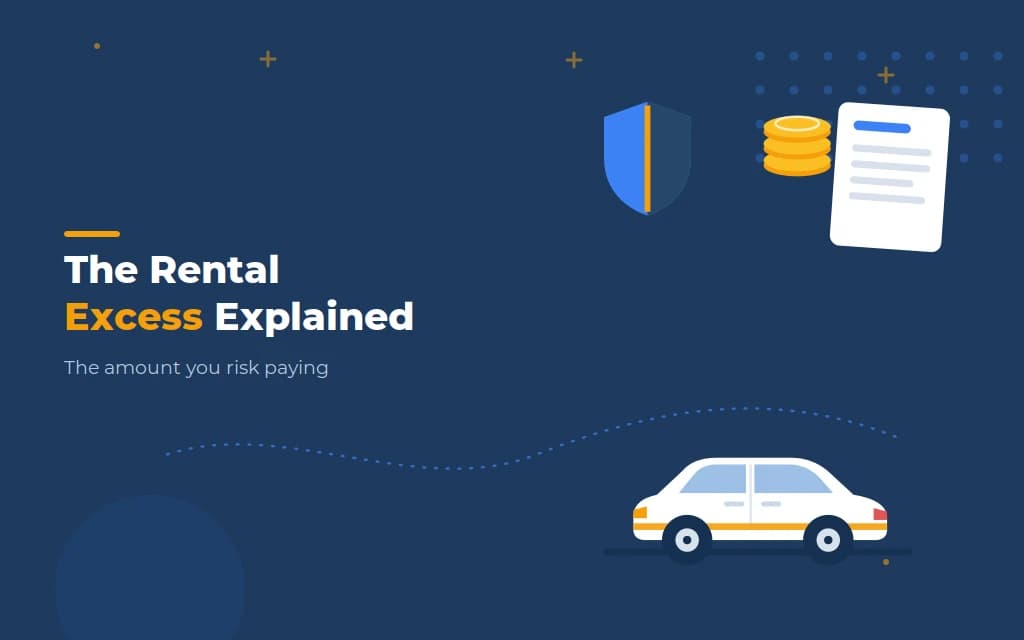
The excess, called the franchise in France, is the maximum you pay out of your own pocket if the rental car is damaged or stolen. Everything above it is the company's problem; everything below it is yours. In France it typically runs €1,000 to €3,000, which makes it the biggest financial number in your rental by far, and the one least visible in the advertising. Here's what the excess actually covers, why it exists, and the three legitimate ways to make it smaller or make it vanish.
How the excess works in practice
Say your contract carries a €1,200 excess and you return the car with a dented door. If the repair costs €700, you pay €700. If it costs €4,000, you pay €1,200 and the cover absorbs the rest. If the car is stolen, you pay €1,200, sometimes a separate higher theft excess. The excess isn't a fine or a penalty; it's the slice of risk the standard insurance deliberately leaves with you, which is precisely why the standard insurance can be included in the rate.
Two details sharpen the picture. First, the deposit blocked on your card is sized against the excess, which is why a big franchise means a big hold. Second, the excess applies per incident, not per rental: two separate scrapes on one trip can each trigger it. Add the standard exclusions, glass, tyres and underbody billed outside the excess entirely at many agencies, and the full risk picture of a "fully insured" rental becomes honest. The wider map of what French rental cover includes is in our rental insurance in France guide.
Typical excess amounts in France
- Economy and compact cars: €800 to €1,500 with the major agencies.
- Mid-size, SUVs and estates: €1,200 to €2,000.
- Premium and luxury: €2,000 to €3,000 and beyond, often paired with a higher theft excess.
- The cheap-broker special: the lowest headline rates frequently hide the highest excesses, €2,500 on an economy car isn't rare, because the excess is where the discount went.
The excess figure is always in the rental conditions, usually beside the deposit line. Reading those two numbers together, before paying, is most of what "being careful with rental contracts" means. And if an agency ever charges beyond the excess its own contract states, that's a dispute you win: the European Consumer Centre Network's car rental rights page sets out the rules an EU rental must honour.
Three ways to remove or shrink it
- The agency's waiver. Super CDW or a full-protection package bought at booking or the counter drops the excess to zero or near it for roughly €15 to €40 per day. Most convenient, most expensive, and the only option that also shrinks the deposit hold. Whether it earns its price is a genuine question, argued honestly in our piece on whether the excess waiver is worth it.
- Third-party excess insurance. Independent insurers cover your excess for around €5 to €10 per day, or via cheap annual policies for frequent renters. You pay the agency if something happens, then claim it back. Cheapest per day, but the deposit hold stays full-size and you carry the cash-flow risk while the claim processes.
- A zero-excess rate. Some rentals, including our no-deposit rates, build reduced or zero excess into the price from the start, so there's nothing to waive and little to hold. Our no-deposit car rental in Paris works exactly this way, with the excess figure printed before you book, nothing blocked on your card and no credit card required.
FAQ — Common Questions Answered.
What does "excess" or "franchise" mean on a rental car?
It's the amount of any damage or theft cost that stays yours to pay before the included insurance covers the rest. A €1,500 excess means the first €1,500 of a repair bill lands on you, whatever the total. In France you'll see it written as "franchise" in contracts and booking pages, and it typically ranges from €800 on small cars to €3,000 on premium ones.
What does theft excess mean?
It's the excess that applies if the car is stolen rather than damaged, and at many agencies it's a separate, higher figure than the damage excess, especially on premium cars. If a €1,200 damage excess sits beside a €2,000 theft excess, a stolen car costs you €2,000 and the cover pays the rest. It's usually printed on the same conditions line as the damage excess, and the theft cover carries its own rules: leave the keys in the car or park somewhere the contract excludes and the excess can turn into the full value.
Can the rental company charge me more than the excess?
For ordinary damage, no, the excess is your ceiling, plus any administration fee the contract names. The exceptions are the situations the cover excludes entirely: damage to excluded parts like glass or tyres at some agencies, and anything done in breach of contract, an unlisted driver, drink-driving, off-road use. In those cases the waiver is void and the full cost is chargeable, which is why the exclusions list deserves a minute of your attention.
Is it better to pay the excess waiver or risk it?
It depends on the arithmetic of your trip, not on a universal answer. A €25-per-day waiver over two weeks costs €350 against a €1,200 risk that most rentals never touch. A three-day rental makes the same waiver cost €75, cheap insurance for a calm head. Run the numbers on your trip length, your parking situation and what a surprise €1,200 would do to you, and decide at booking rather than under counter pressure.